

Pole Art: What Is It and Who Is It For?
Over the years, Pole Dance has evolved into different disciplines, each with its own purpose, style, and goals. Among them, Pole Art, also known as Artistic Pole, stands out for emphasizing body expression and the creation of performances filled with identity and emotion.
It is the perfect discipline for those who want to explore the artistic side of pole without giving up strength and technique.
In this article, we will explore this growing branch of Pole Dance that has been gaining increasing space in studios and on stages, showing how pole can go beyond sport and become art.
What Is Pole Art?
Pole Art is the branch of Pole Dance that emphasizes artistic performance. Here, the focus goes beyond technical execution: interpretation, musicality, costume design, and storytelling are fundamental elements.
In Pole Art, the goal is to tell a story or convey emotion through dance and acrobatics. As a result, every performance carries the identity, style, and sensitivity of the performer.
Among the main characteristics of Pole Art, we can highlight:
-
Concept-driven choreography
-
Interpretation and theatricality
-
Creative use of space
-
Integration of spins, transitions, and acrobatic movements
-
Appreciation of aesthetics and fluidity
-
Interaction with other stage elements
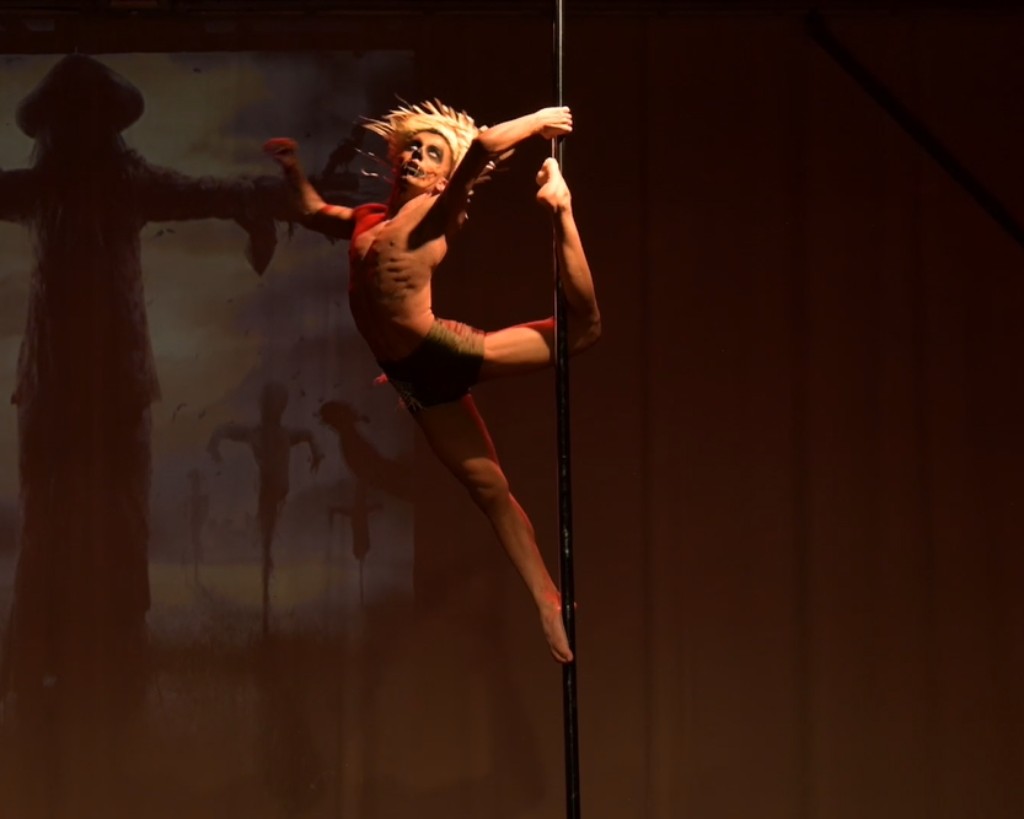
Photo: Diover Almeida – Curitiba Pole Art 2025
How Did Pole Art Emerge?
When discussing Pole disciplines, it is difficult to determine an exact origin. However, Pole Art gained momentum as Pole Dance began interacting with other artistic languages, especially contemporary circus arts.
One of the major milestones in this transformation was the influence of companies such as Cirque du Soleil, which incorporated the pole into performances with strong aesthetic, theatrical, and acrobatic appeal.
By bringing pole to the stage and integrating it into high-level artistic productions, these performances helped establish the discipline as a legitimate form of performing art. The focus shifted from purely executing tricks to including storytelling, emotion, and stage composition.
Within this context, artists began blending pole with apparatus such as aerial silks, trapeze, and other circus equipment, creating performances that combine strength, flexibility, and creativity.
This fusion expanded the possibilities of the discipline and inspired a new generation of practitioners to explore pole beyond traditional formats, consolidating Pole Art as its own branch within the Pole Dance universe.
Who Is Pole Art For?
If you connect with performance, body expression, and storytelling, Pole Art may be the perfect discipline for you.
You do not need to be a professional performer or competitor. Pole is a form of self-expression open to anyone willing to embrace its challenges and rewards, regardless of age, gender, or fitness level.
Artistic pole allows every practitioner to explore their own essence, whether through a dramatic, playful, sensual, or contemporary approach.
The most important thing is to allow yourself to feel and express.
Conclusion
Artistic Pole is the union of strength, technique, and art. Far beyond acrobatics, it transforms movement into emotion and creates meaningful connections between performer and audience.
As the discipline continues to evolve, it proves that self-expression and physical conditioning can go hand in hand, offering an empowering and rewarding practice for everyone who chooses to embrace it.
Now that you know more about Pole Art, how about discovering more about the history of Pole Dance and its entire universe?
Read the Pole Dance Guide for Practitioners.